 9:52 PM
 P.G.R.


Albert Einstein (14 March 1879 – 18 April 1955) was a German-born theoretical physicist. He is best known for his theory of relativity and specifically mass–energy equivalence, expressed by the equation E = mc2. Einstein received the 1921 Nobel Prize in Physics "for his services to Theoretical Physics, and especially for his discovery of the law of the photoelectric effect."
 Niels Henrik David Bohr (7 October 1885 – 18 November 1962) was a Danish physicist who made fundamental contributions to understanding atomic structure and quantum mechanics, for which he received the Nobel Prize in Physics in 1922. Bohr mentored and collaborated with many of the top physicists of the century at his institute in Copenhagen. He was also part of the team of physicists working on the Manhattan Project. Bohr married Margrethe Nørlund in 1912, and one of their sons, Aage Niels Bohr, grew up to be an important physicist who, like his father, received the Nobel prize, in 1975. Bohr has been described as one of the most influential physicists of the 20th century.
Sir Isaac Newton was an English physicist, mathematician, astronomer, natural philosopher, alchemist, and theologian and one of the most influential men in human history. His Philosophiæ Naturalis Principia Mathematica, published in 1687, is considered to be the most influential book in the history of science. In this work, Newton described universal gravitation and the three laws of motion, laying the groundwork for classical mechanics, which dominated the scientific view of the physical Universe for the next three centuries and is the basis for modern engineering. Newton showed that the motions of objects on Earth and of celestial bodies are governed by the same set of natural laws by demonstrating the consistency between Kepler's laws of planetary motion and his theory of gravitation, thus removing the last doubts about heliocentrism and advancing the scientific revolution.

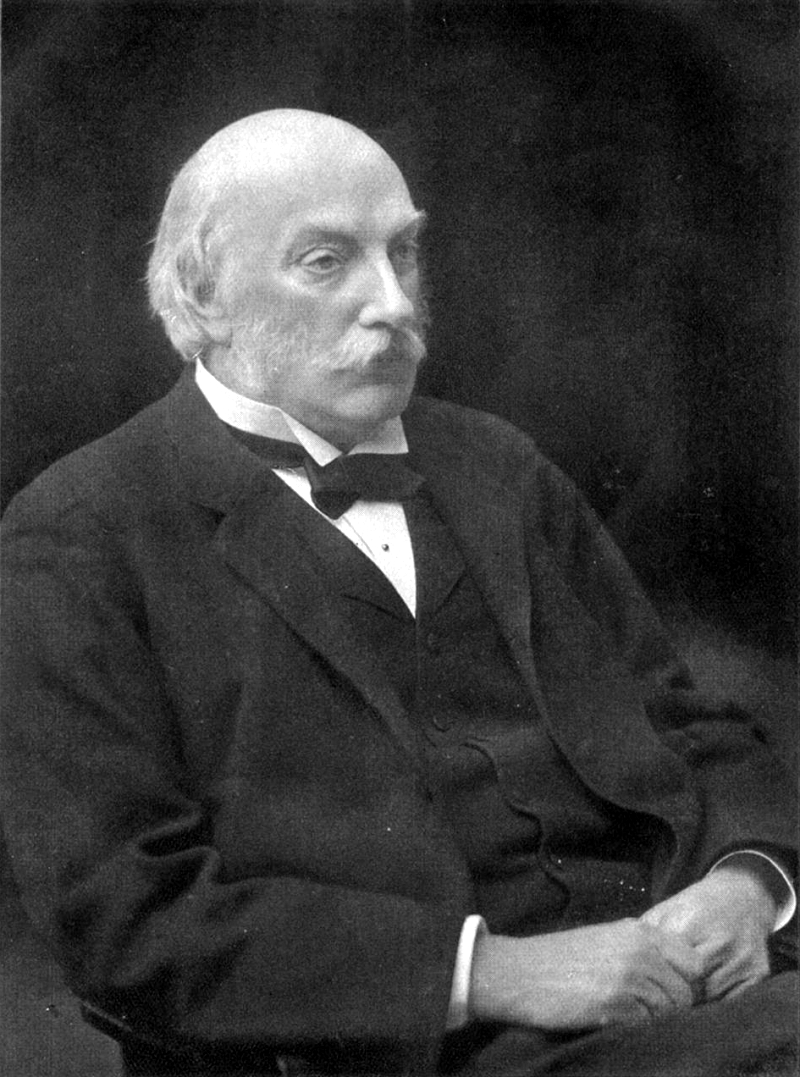
John William Strutt, 3rd Baron Rayleigh OM (12 November 1842 – 30 June 1919) was an English physicist who, with William Ramsay, discovered the element argon, an achievement for which he earned the Nobel Prize for Physics in 1904. He also discovered the phenomenon now called Rayleigh scattering, explaining why the sky is blue, and predicted the existence of the surface waves now known as Rayleigh waves.
 Nicolas Léonard Sadi Carnot (1 June 1796 – 24 August 1832) was a French physicist and military engineer who, in his 1824 Reflections on the Motive Power of Fire, gave the first successful theoretical account of heat engines, now known as the Carnot cycle, thereby laying the foundations of the second law of thermodynamics. He is often described as the "Father of thermodynamics", being responsible for such concepts as Carnot efficiency, Carnot theorem, Carnot heat engine, and others.
 Karl Ernst Ludwig Marx Planck, better known as Max Planck (April 23, 185
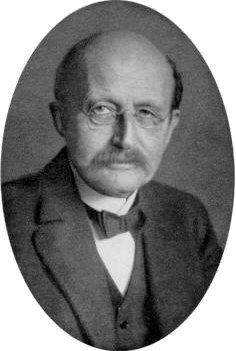 8 – October 4, 1947) was a German physicist. He is considered to be the founder of quantum theory, and one of the most important physicists of the twentieth century.With the completion of his habilitation thesis, Planck became an unpaid private lecturer in Munich, waiting until he was offered an academic position. Although he was initially ignored by the academic community, he furthered his work on the field of heat theory and discovered one after another the same thermodynamical formalism as Gibbs without realizing it. Clausius's ideas on entropy occupied a central role in his work.In April 1885 the University of Kiel appointed Planck as associate professor of theoretical physics. Further work on entropy and its treatment, especially as applied in physical chemistry, followed. He proposed a thermodynamic basis for Svante Arrhenius's theory of electrolytic dissociation.Within four years he was named the successor to Kirchhoff's position at the University of Berlin — presumably thanks to Helmholtz's intercession — and by 1892 became a full professor. In 1907 Planck was offered Boltzmann's position in Vienna, but turned it down to stay in Berlin. During 1909 he was the Ernest Kempton Adams Lecturer in Theoretical Physics at Columbia University in New York City. He retired from Berlin on January 10, 1926, and was succeeded by Erwin Schrödinger.


 Posts
Posts


0 comments:
Post a Comment